If water is standing in your basement or on your floors, we remove it with professional portable extractors. In most cases we are on site within the hour, and drying starts on the same visit. Extraction in a typical basement takes 1 to 2 hours, and up to 4 hours after a large flood. Then air movers and LGR dehumidifiers dry the structure, which usually takes 3 to 5 days. Call us 24/7 at (216) 352-5700.
What to do before we get there
Shut off the main water valve if you can.
If water is touching outlets, extension cords or appliances, stay out of it. If your breaker panel is in a dry spot, turn off the power.
Move valuables, papers and boxes out of the water.
Take photos of the water and the damage for your insurance before you throw anything away.
If sewage came up through a drain, do not touch it, and keep children and pets away.
Assessment. A moisture meter and a thermal camera show how far the water has spread and where it is coming from.
Clean water or sewage. We explain in plain terms what kind of water it is and what can be saved.
Step 3
Extraction
Extraction. Portable extractors pull the water out of floors and carpet.
Drying equipment does very little while water is still sitting in the carpet or on the floor, so extraction always comes first.
Step 4
What Cannot Be Saved
What cannot be saved. Soaked carpet pad, and when needed the bottom strip of drywall, comes out, and everything is documented.
Clean water vs. sewage
Clean water: a burst pipe, a water heater, a washing machine hose. If we act fast, a lot can be saved.
Sewage: a drain backup or a toilet overflow. It needs different protective gear and disinfection, and more materials have to come out.
Steps 5 and 6
Drying and Finish
Drying. Air movers and LGR dehumidifiers run, and we take moisture readings every day.
Finish. When the readings are back to normal, the equipment comes out. If repairs or rebuilding are needed, we handle those too.
Time, Cost and Insurance
How Long It Takes and What It Costs
Extraction takes 1 to 2 hours (up to 4 hours for a large flood), and drying usually takes 3 to 5 days. The exact time depends on how much water there was, how long it sat, what it soaked into, and whether it is a basement or a finished living area.
What affects the cost
The amount of water, the materials affected, whether it is clean water or sewage, how long it sat, how easy the area is to reach, and how many days of drying it needs. The on-site assessment, moisture readings and estimate are free.
Working with your insurance
Water damage from a sudden pipe burst or appliance failure is often covered by homeowners insurance, but your policy decides. We take photos and keep a daily moisture log for your adjuster, and we talk to your insurance company directly. On insurance jobs we do not ask for full payment upfront. More on our insurance claim support.
Water on the Floor Right Now?
Call TriGuard 24/7 for Fast Water Extraction Across Greater Cleveland
For a small puddle of clean water, yes. It will not pull out water that has soaked into the floor or walls, and it should never be used on sewage.
Do I need new carpet?
With clean water and a fast response, carpet can often be saved, but the pad often has to be replaced. With sewage, both the carpet and the pad come out.
Yes. We document the damage and work directly with your adjuster.
Can I stay home during drying?
Yes, in most cases. The equipment is noisy and gives off some heat. With sewage, we close off the affected area.
Recent Water Extraction Jobs
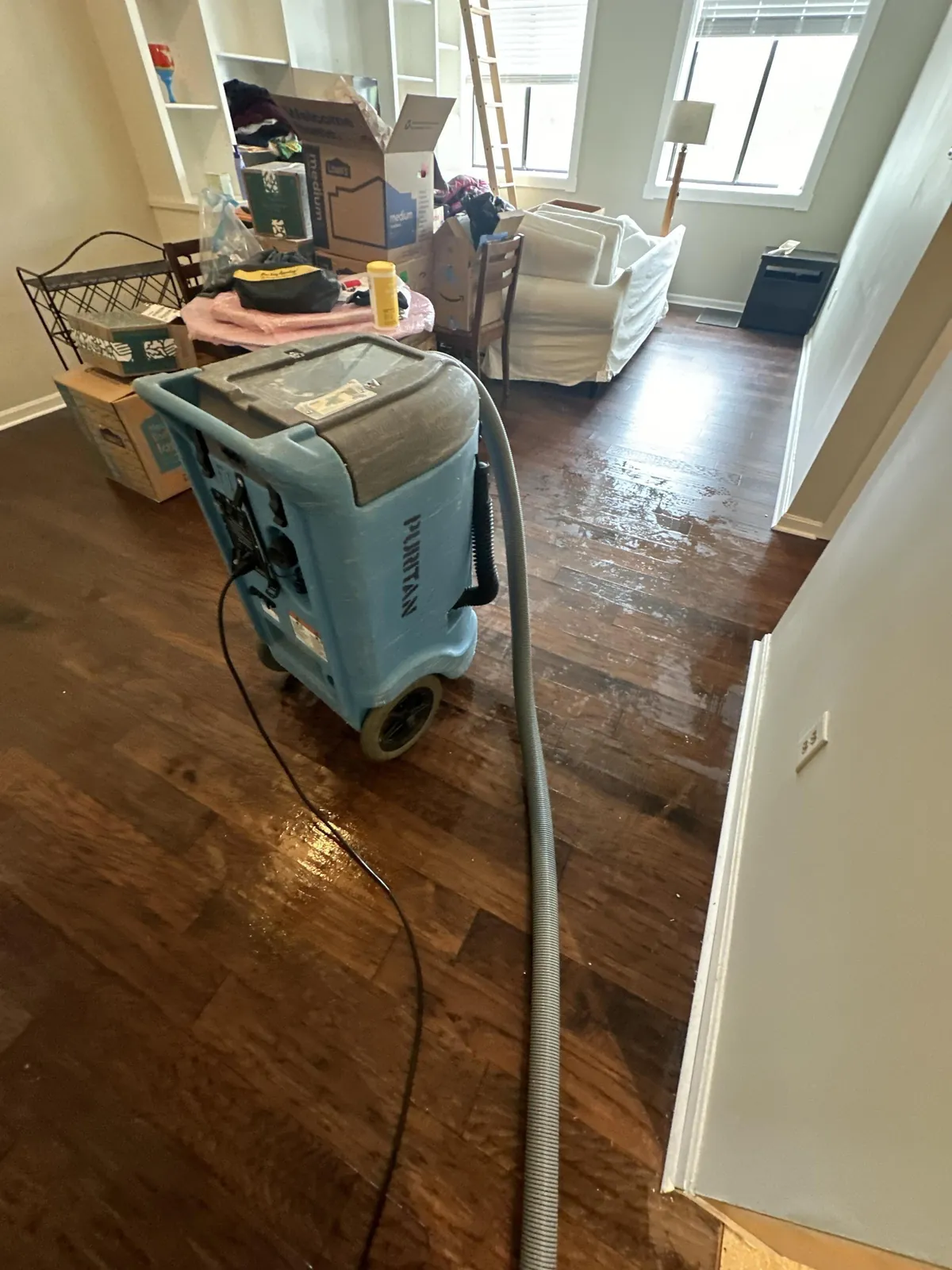
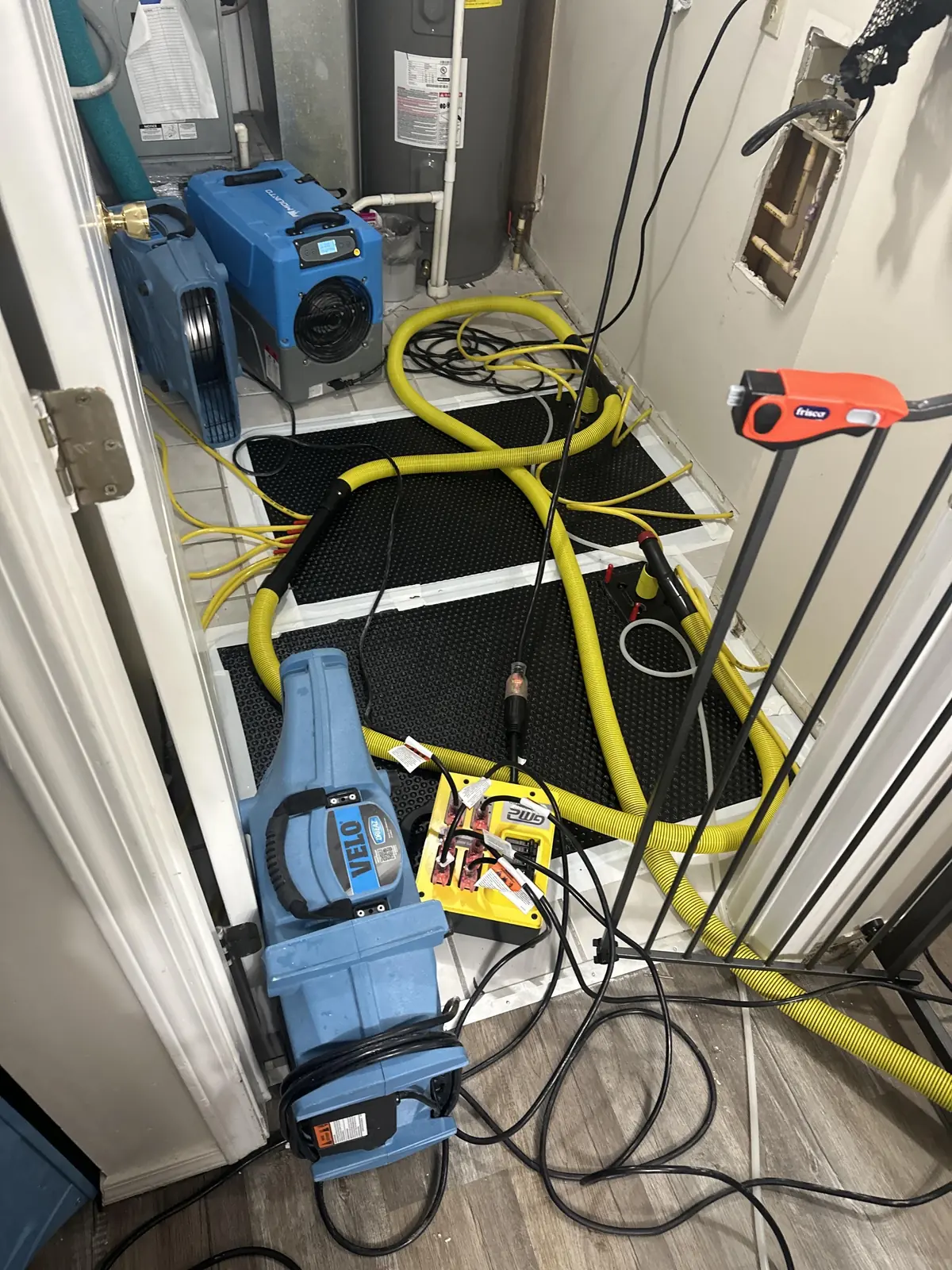
Parma: water extraction from a hardwood floor and carpet with a portable extractor, and a laundry room after a burst pipe, where drying mats pulled the water out of the floor while air movers and a dehumidifier dried the room.
Shaker Heights: water extraction from a tiled basement floor, a flooded kitchen laminate floor, and a hallway where water had run under the carpet onto the hardwood, plus a thermal camera inspection to find where the water had traveled.